


Thermochemical gas analyzers: a selection guide and working principle
In modern industrial conditions, controlling the composition of the gas environment is a critically important aspect of ensuring safety, energy efficiency, and quality of production processes. Among the wide range of instruments for monitoring the air environment, thermochemical gas analyzers occupy a special place. These devices are high-precision tools capable of detecting the presence of combustible gases, vapors of flammable liquids, and other hazardous substances based on measuring the thermal effect of chemical reactions.
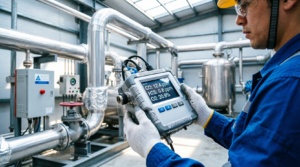
The “LET” Company, being a supplier of measuring equipment in Russia, offers a comprehensive approach to solving gas analysis tasks. To receive an individual commercial proposal or free consultation on equipment selection, contact our specialists.
Operating principle of thermochemical gas analyzers
The basis of thermochemical gas analyzers operation is the calorimetric method of measuring the concentration of combustible components in a gas mixture. The physical essence of the process lies in registering the amount of heat released during the oxidation (combustion) of the determined component in the presence of a catalyst or open flame.
Traditionally, such instruments use a bridge circuit with two sensitive elements: working and reference. The working element is coated with a catalyst that accelerates the oxidation reaction of the combustible gas entering the measuring chamber. The reference element either lacks a catalyst or is in an inert gas environment, and serves to compensate for changes in ambient temperature, pressure, and humidity. When combustible gas contacts the working catalyst, an exothermic reaction occurs, the temperature of the working element increases, which leads to a change in its electrical resistance. The difference in resistance between the working and reference arms of the bridge is proportional to the concentration of the combustible substance in the sample.
This method has high versatility, as it allows detecting a wide range of combustible gases – from methane and propane to hydrogen-containing mixtures and gasoline vapors. However, it is important to understand that thermochemical sensors respond not to a specific type of molecule, but to the total heat release during oxidation. Therefore, the instrument calibration is usually performed using a reference gas (most often methane or pentane), and readings for other gases are recalculated using sensitivity coefficients.
Key advantages of the technology
The choice of thermochemical gas analyzers is due to a number of significant advantages over other types of sensors, such as electrochemical or optical (infrared) sensors.
First, this is high reliability and durability. The absence of complex optical systems or rapidly degrading electrolytes makes thermochemical sensors resistant to harsh operating conditions. They are less susceptible to vibrations and mechanical impacts, which is critical for the oil and gas industry and heavy engineering.
Second, a wide dynamic measurement range. Thermochemical instruments are capable of operating effectively both in low concentration zones (for leak detection) and in high concentration zones approaching the lower explosive limit (LEL). This makes them ideal for emergency alarm and protection systems.
Third, relatively low maintenance costs. Sensitive elements have a long service life, and the calibration procedure is simple and does not require expensive equipment. Sensor replacement is usually a quick operation that does not require complete instrument reconfiguration.
In addition, thermochemical gas analyzers demonstrate good selectivity to combustible substances against the background of inert gases. They do not respond to nitrogen, carbon dioxide, or water vapor if they do not contain combustible impurities, which reduces the number of false alarms in industrial workshops.
Applications of thermochemical gas analyzers
The scope of these instruments is extremely wide and covers virtually all industries where there is a risk of explosive atmospheres.
- Oil and gas sector. This is the main consumer of thermochemical analyzers. Instruments are installed on drilling rigs, oil refineries, compressor stations, and pipelines. They control leaks of methane, propane, butane, and other hydrocarbons at all stages of raw material extraction, transportation, and processing.
- Chemical and petrochemical industry. Various solvents, alcohols, ketones, and other volatile organic compounds constantly circulate in chemical production facilities. Thermochemical gas analyzers provide continuous air monitoring in work areas, preventing personnel poisoning and fires.
- Coal industry. Methane accumulation in mines poses a deadly danger. Stationary and portable thermochemical analyzers are part of the mandatory equipment set for controlling mine atmosphere.
- Energy sector. At thermal power plants and boiler houses, these instruments are used to control the completeness of fuel combustion in furnaces, as well as to detect natural gas leaks in fuel supply systems.
- Laboratory research and environmental monitoring. Portable versions of the instruments are used by ecologists to assess air pollution near industrial zones, as well as in scientific laboratories for analyzing gas mixture composition.
Device classification
For ease of selection, thermochemical gas analyzers are classified according to several criteria: design, number of measured components, and sampling method.
By design, the following are distinguished:
- Stationary gas analyzers. Designed for continuous 24/7 monitoring at fixed points. They have high power, the ability to integrate into ACS TP (automated process control systems) and output data to the dispatcher panel.
- Portable gas analyzers. Compact devices with autonomous power supply, used by mobile teams for one-time measurements or inspections. Often equipped with a pump for forced sampling from hard-to-reach places.
- Gas detectors. A simplified version, the main task of which is to emit sound and light signals when the threshold concentration is exceeded.
By sampling method, instruments with diffusive gas supply (gas enters the sensor by natural convection) and with forced sampling (using a built-in pump) are distinguished. Diffusive models are cheaper and easier to maintain, but require more time to react. Models with a pump provide a quick response and allow measurements in confined spaces, wells, and tanks.
Technical specifications and selection parameters
When preparing to purchase a thermochemical gas analyzer, it is necessary to carefully study a number of technical parameters that determine the instrument’s suitability for specific tasks.
| Parameter | Description and influence on selection |
|---|---|
| Measurement range | Determines the minimum and maximum concentration of the detectable gas. For fire safety purposes, a range up to 100% LEL is usually selected. For environmental control, ranges in ppm (parts per million) may be required. |
| Sensitivity to target gas | It is important to know which gas the instrument is calibrated for. If hydrogen detection is planned, and the instrument is calibrated for methane, a correction factor will need to be introduced, which may reduce accuracy. It is better to choose a model specialized for the required gas. |
| Response time (T90) | The time it takes for the instrument to show 90% of the actual concentration value after gas exposure. For emergency systems, a time of less than 15-20 seconds is critical. For stationary monitoring, up to 30-60 seconds is acceptable. |
| Operating conditions | Ambient temperature, humidity, pressure. Thermochemical sensors are sensitive to oxygen deficiency, as an oxidizer is required for oxidation. They will not work in oxygen-free environments. |
| Explosion protection | Explosion protection marking (for example, Ex d IIC T6) is mandatory for installation in hazardous areas. It guarantees that sparks or heating of the instrument housing will not become a source of ignition of the external environment. |
| Communication interfaces | The presence of analog outputs (4-20 mA), digital interfaces (RS-485, Modbus) or relays is necessary for integration into existing enterprise control systems. |
Comparison with other sensor types
To finally ensure the feasibility of choosing thermochemical technology, it is useful to compare it with alternatives.
| Sensor type | Advantages | Disadvantages | Best application |
|---|---|---|---|
| Thermochemical | Low price, reliability, wide range of combustible gases, ease of maintenance. | Requires oxygen, possible catalyst poisoning by silicones or sulfur, consumes energy for heating. | General protection against explosive mixtures, oil and gas, mines. |
| Infrared (NDIR) | Does not require oxygen, does not get poisoned, very long service life, high selectivity. | High cost, large dimensions, complex setup, does not work well with hydrogen. | Control of specific gases (CO2, CH4) in aggressive environments, oxygen-free processes. |
| Electrochemical | High sensitivity to toxic gases (CO, H2S, NOx), low power consumption. | Limited service life (1-2 years), temperature sensitivity, narrow specialization. | Monitoring of toxic impurities, occupational safety, personal dosimeters. |
| Semiconductor | Very low cost, compactness. | Low stability, strong dependence on humidity and temperature, zero drift. | Household detectors, inexpensive ventilation systems. |
As can be seen from the table, thermochemical sensors occupy a “golden mean” niche for general explosion safety tasks, offering an optimal price-to-reliability ratio.
Factors affecting cost and purchasing process
The cost of equipment varies widely and depends on several key factors: brand and country of origin, number of measurement channels, availability of additional options (built-in pump, explosion-proof housing, digital interfaces) and mandatory certification (entry in the State Register of Measuring Instruments, explosion protection marking).
For convenient budget planning, a table with approximate prices in the Moscow market is provided below.
| Equipment type | Approximate purpose | Approximate cost |
|---|---|---|
| Portable single-channel gas analyzer (with thermochemical sensor) | Mobile control of LEL of methane, propane and other combustible gases in work areas and wells. | 18,000 – 35,000 ₽ |
| Portable multi-channel gas analyzer (with thermocatalytic channel) | Comprehensive control of combustible gases combined with oxygen and toxic impurities monitoring (CO, H₂S). | 45,000 – 85,000 ₽ |
| Stationary single-channel gas detector | Continuous automatic monitoring of explosive atmospheres in boiler rooms, warehouses and outdoor areas. | 35,000 – 70,000 ₽ |
| Stationary multi-channel gas analysis system (controller + remote thermochemical sensors) | Centralized control of technological processes, ventilation and emergency valve control at large facilities. | 120,000 – 300,000 ₽ |
| Calibration and maintenance kit (calibration gas mixture (CGM), regulator, adapter) | Regular metrological verification and adjustment of thermochemical sensor sensitivity. | 6,000 – 15,000 ₽ |
Note: The specified prices are approximate for the Moscow market and may vary depending on the specific manufacturer, instrument configuration, delivery terms and the need for additional commissioning work. Equipment with a certificate of approval of the type of measuring instruments and explosion protection certificates is usually in the higher price category, however, its use is mandatory for legal operation at industrial facilities in the Russian Federation.
When purchasing, it is important to consider not only the initial cost of the instrument, but also the total cost of ownership (TCO). This includes costs for periodic verification (usually once a year), filter replacement, purchase of calibration gas mixtures and possible sensor replacement after 3-5 years of operation. The “LET” Company cooperates with proven manufacturers, ensuring a balance of price and quality, as well as transparency of financial conditions for its clients.
Operation and maintenance features
To ensure accurate readings, thermochemical gas analyzers require regular maintenance. The main problem with such sensors is catalyst “poisoning”. Substances containing silicon (silicones), lead, sulfur or chlorine can irreversibly block the active centers of the catalyst, leading to loss of sensitivity or complete sensor failure. Therefore, in environments with high content of such impurities, it is necessary to use special filters or choose alternative analysis methods.
It is also important to regularly check the zero point and calibrate against a reference gas. It is recommended to perform test checks using control gas mixtures at least once a month. Full metrological verification should be carried out by accredited laboratories within the timeframes specified in the instrument passport (usually 1 year).
Instruments should be stored in a dry room at room temperature. Long-term storage without power-on can lead to degradation of some electronic components, so even unused spare instruments should be periodically turned on and checked.
Why choose “LET” Company
Choosing a measuring equipment supplier is not only a matter of price, but also of expert support. The “LET” Company offers clients a comprehensive service that includes:
- Professional equipment selection. Company specialists will help you choose the optimal model of thermochemical gas analyzer based on the specific conditions of your production, gas mixture composition and regulatory documentation requirements.
- Quality and authenticity guarantee. All offered instruments have the necessary certificates and passports, which guarantees their compliance with Russian safety standards.
- Technical support and training. The company provides consultations on installation, setup and operation of instruments. If necessary, customer personnel training on equipment operation rules is conducted.
- Fast delivery and logistics. Thanks to established supply channels, we will ensure fast delivery of equipment to any region of Russia.
- Service maintenance. Services for periodic verification, repair and calibration of instruments are available, which extends their service life and maintains measurement accuracy.
For detailed consultation, cost calculation or order placement, company specialists are always ready to answer your questions. You can contact us by phone +7 (495) 232-00-66 or send a request to Email – let@eca.ru. Our managers will promptly provide a commercial proposal and help solve any technical tasks.
Thermochemical gas analyzers remain one of the most sought-after and reliable tools for ensuring industrial safety. Their ability to effectively detect a wide range of combustible gases, combined with the relative simplicity of design and low maintenance costs, makes them indispensable in the oil and gas, chemical and energy industries.
Proper instrument selection requires consideration of many factors: from the composition of the controlled environment to operating conditions and integration requirements into control systems. Mistakes at the selection stage can lead not only to financial losses, but also to serious accidents. Therefore, it is extremely important to turn to professionals with deep knowledge in the field of gas analysis.
The “LET” Company strives to provide its clients with the best solutions on the market, combining high equipment quality with an expert approach to each project. Investments in high-quality thermochemical gas analyzers are an investment in employee safety, property preservation and production process continuity. Do not postpone safety issues for later. Contact us today to select equipment that is ideal for your tasks, and ensure reliable control of the gas environment at your facility.
Remember that timely purchase and proper operation of thermochemical gas analyzers is the foundation of safety culture at any industrial facility. Trust professionals, choose proven technologies and be confident in the protection of your business.