


Water hammer arrester: types and selection for heating, water supply and sewer systems
Water hammer is one of the most destructive phenomena in pipeline systems. Sudden valve closure, abrupt pump stoppage, or mode switching can create pressure spikes many times higher than nominal within fractions of a second. The result is pipe bursts, failure of mixers, household appliances, and industrial equipment. A water hammer arrestor solves this problem: the device absorbs the energy of the shock wave, dampens the surge, and returns the system to a stable state.
What Is a Water Hammer Arrestor and Why Is It Needed
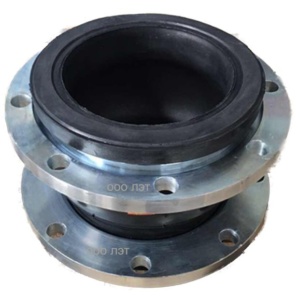 A water hammer arrestor is a compact device integrated into a pipeline and designed to absorb excess pressure caused by hydraulic shocks and sudden flow fluctuations. An elastic chamber—a membrane, bellows, or rubber shell—is placed inside the housing, separating the working medium from an air or gas cushion. During a pressure surge, the fluid expands into the damping chamber, and after stabilization, it smoothly returns to the main line.
The role of the arrestor goes beyond accident prevention. The device reduces noise and vibration in pipes, extends the service life of valves, pumps, and heating appliances, and prevents false triggering of automation. In systems with frequent mode changes—such as apartment buildings with solenoid valves or industrial facilities with cyclic loads—installing an arrestor becomes not a recommendation but a necessity.
It is important to distinguish between concepts. A water hammer arrester targets instantaneous peak impulses, while a pressure compensator addresses the broader task of overall system pressure stabilization, smoothing both short-term surges and moderate fluctuations. In professional practice, both devices complement each other but are selected for different operational scenarios.
Operating Principle and Design Features
Regardless of type, the arrestor operates on a single physical principle: the energy of the shock wave is converted into elastic deformation of the damping element. In membrane models, water compresses the air chamber; in spring models, force is transferred to the spring; in bellows models—to the corrugated metal shell. After the peak load subsides, the element returns to its original position, displacing fluid back into the pipeline and equalizing pressure..
Housing components are made of brass, stainless steel, or engineering polymers. Material selection depends on the working medium, temperature, and pressure. For potable water systems, materials approved for contact with drinking water are used; for heating and technical circuits—solutions with enhanced heat resistance.
Main Types of Water Hammer Arrestors
Membrane Arrestors. The most common solution for apartments, private homes, and small facilities. A sealed tank is divided by an elastic membrane: water on one side, air or inert gas under pressure on the other. When pressure rises, the membrane deflects, accepting excess volume; when pressure drops, it returns water to the system. Membrane models are universal: they function both as water hammer arresters and pressure stabilizers.
Spring Arrestors. The mechanical operating principle is based on spring resistance. Such devices can be precisely tuned to a specific pressure range but require periodic adjustment and are more commonly used in specialized engineering solutions..
Bellows Arrestors. A corrugated metal shell (bellows) ensures high sealing integrity at significant temperatures and pressures. Bellows models are in demand in thermal networks, industrial pipelines, and systems requiring compensation not only for water hammer but also for thermal expansion..
Rubber and Flanged Arrestors. An elastic rubber shell effectively absorbs vibration and noise, while flange connections simplify installation at industrial sites. Flanged rubber arrestors are especially valued for their damping properties: they minimize transmission of vibrations from pumps and compressors to the pipeline..
Arrestors for Polypropylene Heating Pipes
Polypropylene pipelines are sensitive to thermal expansion: when the heat carrier heats up, the circuit length increases, and without compensation, this leads to riser deformation, stress on fittings, and risk of joint leaks. Several solutions are available for polypropylene, and the choice depends on route length, temperature, and available space.
Loop-shaped (P-shaped) Arrestors—a classic method where the pipe is given a curved shape. Factory-made loop elements are designed to compensate for expansion in the range of 45–80 mm depending on diameter. The solution is simple and reliable but requires free space for loop placement.
Axial Bellows Arrestors (KSO) take up minimal space and are installed directly in the pipeline break. The design includes two mounting couplings, a steel corrugated tube, and an outer protective casing. Bellows arrestors for polypropylene are used in both reinforced and unreinforced heating and hot water supply systems, withstanding pressures up to 16 atm at temperatures up to 115 °C..
Kozlov Arrestor—a cylindrical multi-layer steel axial bellows element specially adapted for polypropylene pipelines. The device compensates for thermal expansion while simultaneously damping hydraulic impulses, making it in demand in systems with intensive operation modes..
When selecting an arrestor for polypropylene, key factors include pipe diameter, calculated thermal expansion, working pressure, and heat carrier temperature. An error in calculating compensating capacity renders the device ineffective, so selection should be done jointly with a design engineer.
Sewage Arrestor: Application Specifics
Sewage systems differ from pressurized water pipelines in load characteristics. In gravity-flow networks, the arrestor primarily serves a mounting function—compensating for assembly inaccuracies, thermal deformations, and settlement movements. In pressurized sewage pipelines, the arrestor’s role increases: hydraulic shocks from pumping equipment are possible here, and the device protects pipes and valves from dynamic overloads..
Sewage arrestors are made of polyvinyl chloride (PVC), polypropylene (PP), polyethylene (PE), and cast iron for special conditions. Typical diameters are 50, 75, and 110 mm, corresponding to the most common internal sewage sizes. Structurally, they are distinguished as compensating sockets with sealing rings, smooth welding nozzles, and high-flexibility corrugated inserts. For external pressurized networks, mounting inserts are used, designed for axial and lateral displacements, as well as vibrational loads from pumping stations..
When selecting a sewage arrestor, consider network type (gravity-flow or pressurized), pipe material, diameter, effluent temperature, and presence of aggressive components. For networks passing through foundations or in areas of potential settlement, solutions with enhanced deformation capacity are preferred.
Summary Table of Approximate Arrestor Prices in Moscow
| Arrestor Category | Typical Positions / Diameters | Approximate Price, ₽ |
| Membrane Arrestors | 1/2″ (DN15), brass/stainless, volume 0.162 L | 1,040 – 4,290 |
| Spring Arrestors | DN15, brass, threaded connection | 410 – 3,740 |
| Bellows Arrestors | Axial KSO/KSO-DM, DN50–DN80, steel, welded | from 2,670 to 80,000+ |
| Rubber and Flanged Arrestors | DN15–DN100, NBR/EPDM, flange/thread | from 1,460 to 39,600 |
| Arrestors for Polypropylene Heating Pipes | Loop PPR (OD20–OD40); axial/compact (OD25–OD50) | from 100 to 8,800 |
| Sewage Arrestors | Nozzles/arrestors PP/PVC, DN110 | from 150 to 1,690 |
Selection Criteria and Common Mistakes
Arrestor selection begins with system parameters: working and maximum pressure, temperature range, nominal bore diameter, and working medium characteristics. The device must withstand not only nominal operating conditions but also peak loads occurring during water hammer. Housing and seal materials must be compatible with the transported fluid—especially in systems with chemically active media or high temperatures.
A common mistake is installing the arrestor too far from the water hammer source. The shock wave propagates along the pipeline, and damping efficiency decreases with distance from the impulse origin. The device is mounted in immediate proximity to valves, pumps, and other elements generating pressure surges. Another typical error is neglecting compensating capacity calculations: a device with insufficient damping chamber volume will fail to handle the calculated water hammer, even if it formally matches the pipeline diameter.
For critical facilities—thermal points, industrial installations, water treatment systems—an individual engineering calculation considering the network’s hydraulic model is recommended. There is no universal arrestor equally effective in all conditions: each system requires tuning to specific parameters.
Arrestor Supply: LET Company Capabilities
The holding company “Laboratory of Electrochemical Technologies” (LLC “LET”) has been operating in the engineering equipment market since 1998. In addition to its own production of electrolysis units and water treatment solutions, the company supplies a wide range of pipeline valves, arrestors, control and measuring instruments, and tools for utilities, industry, swimming pools, and medical institutions..
LET Company performs a full cycle of work: selection consultation, design, supply, installation, commissioning, and maintenance. This format is especially in demand at facilities where the arrestor is part of a comprehensive engineering system rather than a standalone product. Specialists help determine the device type, calculate compensating capacity, and agree on execution for operating conditions.
You can contact the sales department by phone ☎ +7 (495) 232-00-66 or by email let@eca.ru. Technical support engineers answer questions about equipment selection and arrestor compatibility with existing pipeline systems.
Buying a Water Hammer Arrestor: What to Pay Attention To
When purchasing water hammer arrestors, it is important to evaluate not only the unit price but also the total cost of ownership: device lifespan, repairability, availability of spare parts, and supplier technical support. A cheap model with unconfirmed membrane lifespan may require replacement within months, whereas a properly selected device operates for years without intervention.
Another factor is compliance of declared characteristics with actual conditions. For critical facilities, request technical datasheets and certificates confirming pressure and temperature parameters. For polypropylene heating systems, verify arrestor compatibility with the specific pipe type (reinforced or unreinforced) and calculated thermal expansion. For sewage networks—compliance of diameters and materials with current regulatory requirements.
“LET” Company supplies arrestors with technical documentation and provides engineering support at all stages—from selection to commissioning. For consultation, simply contact us using the details above: specialists will help match system parameters with equipment characteristics and propose an optimal solution within your budget.
Pipeline protection against water hammer is not an expense item but an investment in the longevity of the entire engineering system. A timely installed arrestor prevents accidents, reduces operating costs, and ensures stable equipment operation throughout its service life.